Food and water plans belong together. After a hurricane or a long ice-storm outage, stores may be closed, roads may be blocked, and the refrigerator will not stay cold forever. The simplest plan is to store food before the storm that your household will actually eat, that does not need a fridge, and that you can prepare with the water and heat you will have on hand. For how much water to store and when a filter helps, use our guide to emergency water storage or the water calculator.
Heads up: some links on this page lead to gear listings, which go to official pages until a program is approved. If you later buy through an affiliate link, we may earn a commission at no extra cost to you. Read our disclosure.
This page is general official guidance, not a determination that any specific food is safe, and not a substitute for local health-department or physician instructions.
How much food to store
Ready.gov recommends storing at least a several-day supply of non-perishable food, choosing foods your family will eat, and remembering any special dietary needs. Its basic disaster supplies kit uses the same “several-day” food minimum, and notes that after an emergency you may need to get by on your own for several days.
The American Red Cross is more specific. It recommends non-perishable, easy-to-prepare food: a 3-day supply for evacuation and a 2-week supply for home, plus a manual can opener.
Treat three days as a starting point, not a ceiling, especially along the Gulf South or in inland Mississippi, where a hurricane, flooding, or ice storm can keep you home longer than a weekend. Build a small go-bag supply you can carry, and a larger home reserve you do not have to move. Add food for pets, infant formula or other required foods, and the 7-day medication supply the Red Cross also recommends.
What kinds of food to choose
Ready.gov suggests stocking canned foods, dry mixes, and other staples that do not require refrigeration, cooking, water, or special preparation, and to include a manual can opener and eating utensils. Its suggested list includes ready-to-eat canned meats, fruits, and vegetables; protein or fruit bars; dry cereal or granola; peanut butter; dried fruit; canned juices; non-perishable pasteurized milk; high-energy foods; infant food; and comfort foods.
You may already have many of these in the pantry. That everyday stock counts, as long as you know where it is, it is not sitting in a hot garage, and you can open and eat it if the power is out. Ready.gov also notes that commercially canned food may be eaten out of the can without warming. Still include some no-heat meals and some that only need hot water, and choose foods people in the house will actually eat, including allergy-safe options.
How to choose a kit versus a pantry reserve
A packaged kit is a fast way to cover a set number of days. A pantry you already rotate is often more familiar. Many households do both: a compact kit for a go-bag or the first 72 hours, and a longer home reserve of buckets, cans, and everyday staples. When you compare kits, read the official page for servings, calories per day, allergens, and preparation steps. A “30-day” pail is usually sized for one person at the calories the company lists, not for a whole family. Listings on this site go to official product pages until a program is approved.
The ReadyWise 72 Hour Food Kit is a short-stay option; ReadyWise lists 30 servings, 5,460 total calories, 1,820 calories per day, and a 25-year shelf life. The ReadyWise 5-Day Survival Backpack is a pre-packed go-bag with food and water filtration; add your own medications, documents, and clothing. For a longer stay at home, see the ReadyWise 4-Week Emergency Food Supply or the Augason Farms 30-Day 1-Person Emergency Food Supply. Augason Farms lists 194 servings and 1,290 calories per day for that pail, and says the meals need no refrigeration and are prepared by adding water and cooking. Compare that official calorie figure with what your household actually eats, and add other food if you need more. The Mountain House Classic Meal Assortment Bucket is a freeze-dried assortment prepared with hot water; check the official page for the current lineup and shelf life. More brands live in the food section of the gear directory.
Before you pack anything, count the water a meal needs, plan a safe way to heat it if it requires a boil or a skillet, and keep the go-bag light.
A Gulf South and Mississippi storm angle
In this region, a hurricane, flood, or ice storm can close stores and roads for days. Flooding can also contaminate food that floodwater touches. Store the home reserve on shelves, not on a basement or garage floor, as the FDA and USDA FSIS both recommend.
Summer heat also changes the clock. The FDA advises discarding perishable food held at room temperature for 2 hours or more, or 1 hour if outdoor temperatures are above 90°F. Ready.gov says to keep canned food in a cool, dry place. In the South, a closed garage, attic, or shed can get far hotter than a closet, so keep the reserve indoors, off the floor, away from chemicals, and out of direct sun.
Winter ice storms can keep you home for days with no power and no safe travel. Use a thermometer, not the weather outside, to judge whether food is still safe. The USDA and the FDA both warn not to place perishable food out in the snow. Make ice in clean containers instead, and use that ice in the freezer, refrigerator, or coolers.
Mississippi households can start with the local resource directory for official county and state links, and with the hurricane prep guide for the Gulf South or the winter storm and power-outage guide for the South for the rest of the household plan.
How to cook safely when the power is out
Ready.gov says alternative cooking sources in an emergency can include candle warmers, chafing dishes, fondue pots, or a fireplace, and that charcoal grills and camp stoves are for outdoor use only. Commercially canned food may be eaten without warming.
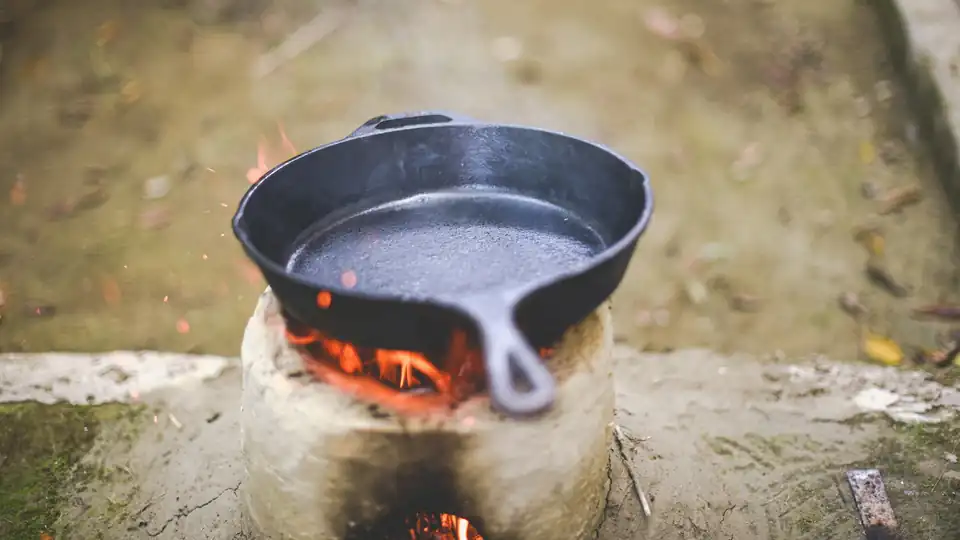
If you use a camping stove, follow that outdoor-only rule without exceptions. A Coleman Classic two-burner propane camping stove or a Mr. Heater Buddy FLEX Cooker can boil water or heat a meal outside. Never use them indoors, in a garage, in a tent, or near open windows. Camp stoves and charcoal produce carbon monoxide, which can kill quickly in enclosed spaces. Keep a working carbon monoxide alarm in the home. A Lodge classic cast iron skillet works on those same outdoor heat sources.
If you heat food in a can, Ready.gov’s steps are: remove the label, thoroughly wash and disinfect the can (it describes a diluted solution of one part bleach to 10 parts water), and open the can before heating. Keep a manual can opener and matches or a lighter with the food.
Keeping refrigerator and freezer food safe
Shelf-stable food is what you eat when the power is out for a long time. The food already in the refrigerator and freezer has official time limits.
FoodSafety.gov, the FDA, USDA FSIS, and the CDC agree on the core rules. Keep appliance thermometers in both compartments (refrigerator at 40°F or below, freezer at 0°F or below) and keep the doors closed. An unopened refrigerator will keep food safe for about 4 hours. A full freezer will hold its temperature for about 48 hours, or about 24 hours if it is half full, if the door stays closed. Food may be safely refrozen if it still contains ice crystals or is at 40°F or below, though quality may suffer. Never taste food to decide whether it is safe. When in doubt, throw it out.
Ready.gov and FoodSafety.gov also note that bacteria grow rapidly between 40°F and 140°F, and that perishable food such as meat, poultry, fish, eggs, or leftovers that has been above 40°F for two hours or more should be discarded. In hot weather, use the FDA’s shorter 1-hour limit when it is above 90°F.
Before a storm, those same pages recommend grouping food in the freezer, freezing leftovers or fresh meat you will not need right away, freezing water or gel packs, and having coolers ready if the power may be out more than four hours. USDA FSIS says 50 pounds of dry ice should hold an 18-cubic-foot freezer for two days; do not touch dry ice with bare hands or place it in direct contact with food. When the power returns, check the thermometer or ice crystals, not appearance or odor alone. For a line-by-line list of what to keep or discard, use the FoodSafety.gov power-outage charts, our one-page Fridge and Freezer Outage Food-Safety Chart, the outage timer, or the free Cold Hold log. Cold Hold helps you record the outage; it does not measure temperature or decide safety.
If floodwater reaches the kitchen
Hurricanes and flash floods can ruin food that never lost refrigeration. Ready.gov, the FDA, USDA FSIS, and the CDC all say to throw away any food that may have come into contact with floodwater or stormwater. That includes food in packages that are not waterproof (screw caps, snap lids, pull tops, or crimped caps), cardboard juice, milk, or formula boxes, and home-canned foods. Discard damaged cans that are swollen, leaking, punctured, deeply rusted, or crushed, and do not eat food from swollen, dented, or corroded cans even if it looks normal.
Some undamaged, commercially prepared foods in all-metal cans or retort pouches can be saved if you follow the official washing and sanitizing steps on the FDA or USDA FSIS pages, and then use the food as soon as possible. USDA FSIS also notes that a refrigerator or freezer that was even partly submerged in floodwater is unsafe to use and must be discarded.
Mistakes to avoid
- Stopping at a 72-hour kit when you may need to stay home for two weeks. Keep a small go-bag and a home reserve.
- Storing the only supply in a hot garage or attic, or never checking dates until a storm is on the map.
- Food that all requires a working stove, a fridge, or more water than you have stored. Include ready-to-eat options and count the water.
- No manual can opener. Ready.gov and the Red Cross both list one with the food.
- Cooking with a camp stove or charcoal grill indoors. Those are outdoor tools only, because of carbon monoxide.
- Opening the refrigerator repeatedly “just to check,” or tasting leftovers to see if they are still good. Official guidance is never to taste food to judge safety.
- Putting meat or milk in the snow. Make ice in clean containers instead.
- Forgetting infants, pets, or special diets.
A simple maintenance schedule
Ready.gov’s kit-maintenance advice is short and worth following as a habit: keep canned food in a cool, dry place; store boxed food in tightly closed plastic or metal containers; replace expired items as needed; and re-think your needs every year as your family changes.
When you first set the supply up. Label shelves or buckets with the earliest use-by date. Put a manual can opener, utensils, and matches with the food. Note which meals need water or heat, and write down where dry ice or block ice is sold near you, as the FDA and USDA recommend.
Every six months, or when you change clocks. Scan dates and packaging. Eat or donate food that is nearing its date and replace it. Check that go-bag food is still sealed, and that you still have a can opener and a safe outdoor way to heat water. Review stored water at the same time, including Ready.gov’s six-month replacement guidance for water you bottled yourself, in the water storage guide.
Once a year. Look at household changes—a new baby, a pet, a medical diet, or more or fewer people at home—and replace anything you used.
When a storm is actually coming. Confirm the refrigerator is at 40°F or below and the freezer at 0°F or below. Freeze extra water and leftovers you will not need immediately, group food in the freezer, and set out coolers. Then leave the fridge and freezer doors closed once the power drops. After the outage or flood, use the official charts to decide what to keep. Never taste to decide.
Put the plan on a shelf, then leave it ready
Store at least the official minimum, and aim for the Red Cross two-week home supply if you can. Keep it in a cool, dry place, with stored water, a manual can opener, and a way to cook outdoors if you need heat. When the power is out, keep the refrigerator doors closed and let thermometers, ice crystals, and the official charts—not a taste test—decide what is still safe.
Official references: Ready.gov on food, Ready.gov on building a kit, the American Red Cross survival kit supplies list, FoodSafety.gov’s disaster guidance and power-outage charts, USDA FSIS, the FDA, and the CDC.